Building an Enduring Enterprise: Creating a Business Legacy through a Business Operating System (BOS)
For many business owners, the goal isn't just to build a successful company; it's to create a lasting asset that provides financial freedom and an enduring legacy. This mission is common: a significant 85% of owners originally started their business with the goal of creating something to pass on, and 84% wanted to create generational wealth.
The urgency for effective planning is growing, especially as demographics shift—approximately 60% of small businesses owners are between the ages of 40-60, highlighting a pressing need for transition readiness.
A key factor in achieving an enduring enterprise lies in adopting a robust Business Operating System (BOS)
BOS | Key factors to create a Business Legacy
A Business Operating System (BOS) serves as the essential architectural blueprint to transform the business into a long-lasting asset that transcends the founders and that can be sold or passed down.
Predictable Performance
- Consistent Quality & Service
- Increased Efficiency & Cost Control
- Strengthened Team Engagement, Alignment & Accountability
- Reduced Key Person Risk
Business Owner Detachment
Increased Business Value
These companies sometimes pose a 20%-30% higher sell value than companies that rely only on an owner’s expertise to function.
BOS | A framework to build sustainable performance
Being a structured framework, BOS unifies strategy, processes, and people, allowing your business to run predictably and efficiently without constant owner intervention. This standardization is the cornerstone of a valuable, scalable, and ultimately, sellable or pass down business.
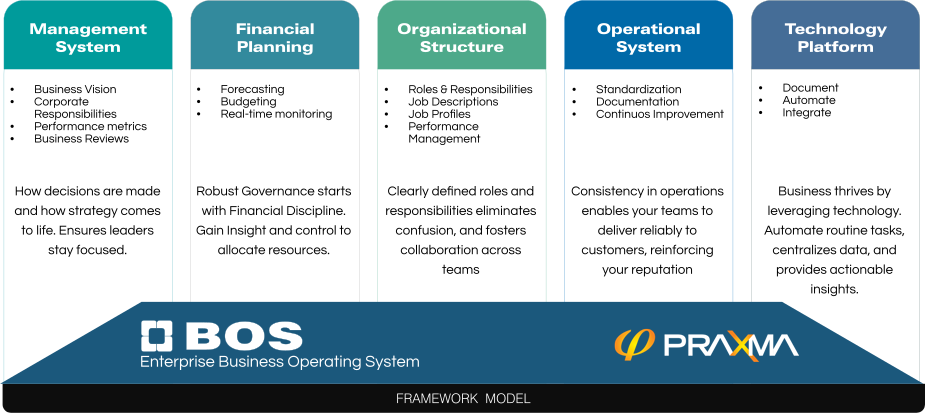
The 5 Pillars of Sustainable Performance
A truly effective BOS integrates five core pillars to ensure sustainable, long-term success and build a valuable asset
This defines how decisions are made, goals are set, and accountability is tracked. A clear management system provides the leadership rhythm necessary for consistent execution.
Beyond basic accounting, this pillar ensures strategic capital allocation, budgeting, and performance metrics are in place to drive profitable growth and ensure fiscal health.
Clarity in roles, responsibilities, and reporting lines is crucial. A well-defined structure ensures everyone knows where they fit and how they contribute to the overall mission.
These are the detailed, day-to-day procedures (SOPs) that ensure all tasks run efficiently, consistently, and without owner intervention. This is where most standardization occurs.
Utilizing the right tools and software automates processes, enhances data flow, and provides the infrastructure needed to support scale and efficiency across all other pillars.
From Job to Asset: The Path to Owner Detachment
The primary outcome of effective standardization and the integration of these pillars is the transformation of a business into an independent, self-managing asset. This is achieved through:
Accountability
and Clarity
When roles and responsibilities are clearly defined within the system, every team member understands their contribution, increasing accountability and reducing confusion.
Operational Consistency
Inconsistency is the enemy of scale, through core processes documentation and standardization, you ensure your product or service is delivered the same way, every time.
Streamlined Training
New hires can be onboarded faster using clear, documented SOPs, reducing the training burden on existing management.
Reaching the summit: Reducing Reliance on the Owner
With the business running on systems, the owner can gradually detach from daily operations, moving from a manager to a strategic leader.
A business that runs independently of its founder is a significantly more attractive prospect for potential buyers or the next generation of leadership. It demonstrates reduced risk, predictable performance, and a clear blueprint for future success.